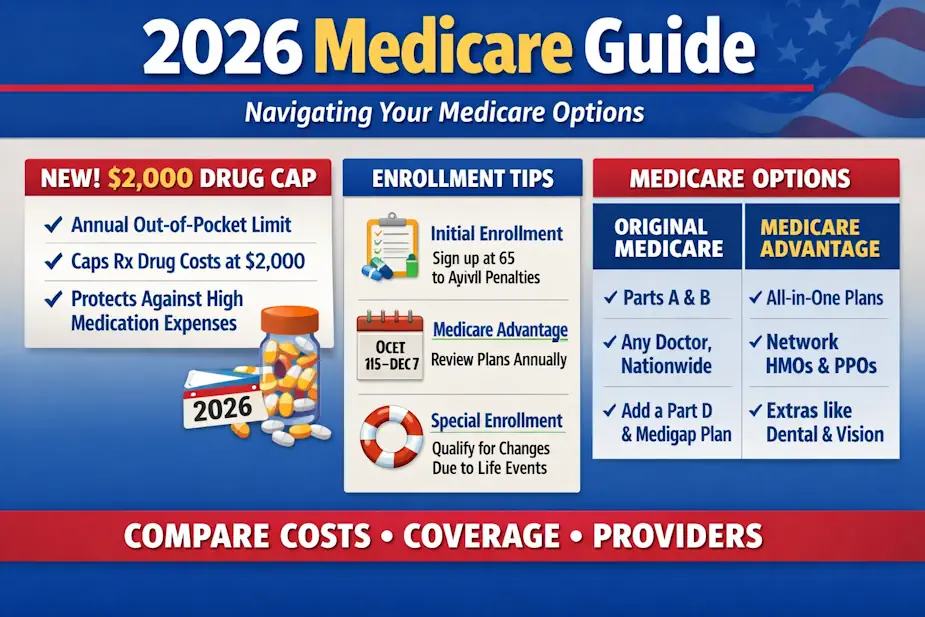
 Figure 1 Your 2026 Medicare roadmap—understand the new $2,000 drug cap, smart enrollment timing, and how to choose between Original Medicare and Advantage for better coverage and savings.
For a senior managing chronic conditions—whether it’s Type 2 Diabetes, heart health, or vascular resilience—Medicare is more than just insurance; it is the financial engine of your healthcare. In 2026, the system has seen its most significant reforms in decades. Understanding these changes ensures you don’t just have coverage, but that you have access to the specific clinical protocols that maintain your healthspan.
Figure 1 Your 2026 Medicare roadmap—understand the new $2,000 drug cap, smart enrollment timing, and how to choose between Original Medicare and Advantage for better coverage and savings.
2026 Milestone: As of January 1, 2026, the out-of-pocket spending cap for prescription drugs (Part D) is strictly limited to $2,000 per year. This is a game-changer for those on high-cost medications like GLP-1s or advanced cardiovascular therapies.
| Feature | Original Medicare + Medigap | Medicare Advantage (Part C) |
|---|---|---|
| Doctor Choice | Any doctor in the US who accepts Medicare. | Usually restricted to a local network. |
| Costs | Higher monthly premium; very low per-visit cost. | Low/Zero monthly premium; copays for every visit. |
| Referrals | No referrals needed for specialists. | Usually requires a PCP “gatekeeper.” |
| Drug Coverage | Requires a separate Part D plan. | Usually included in the plan. |
Missing your window can lead to lifetime penalties. Protect your healthspan by tracking these dates:
“John” uses a CGM (Continuous Glucose Monitor) and Ozempic. In 2025, his drug costs were nearly $4,500. Under the 2026 Part D Cap, his costs dropped to exactly $2,000, and he opted for the M3P payment plan to pay roughly $166/month, stabilizing his household budget.
“Sarah” has a history of vascular risk and prefers her out-of-state cardiologist. She chose Original Medicare + Medigap Plan G. While her monthly premium is higher, she has zero copays for her regular “Vascular Bridge” blood work and no “gatekeeper” delays for her stress tests.
| Term | Definition |
|---|---|
| Doughnut Hole | EXTINCT. As of 2025/2026, the “coverage gap” is gone. You move straight from your deductible to the $2,000 cap. |
| M3P | Medicare Prescription Payment Plan; the new “smoothing” option for drug costs. |
| Extra Help | A federal program for low-income seniors that has been expanded in 2026 to cover more people. |
| Creditable Coverage | Insurance (like from a former employer) that is at least as good as Medicare Part D. |
Q: Does Medicare cover the “Biological Age” tests mentioned on this site? A: Standard labs (like Albumin or Creatinine) are covered. Specialized tests like hs-CRP are covered if you have a documented risk of heart disease or inflammatory conditions. Use our Doctor’s Script to help your physician code these correctly.
Q: What happens if I spend more than $2,000 on drugs? A: Once you hit $2,000 in out-of-pocket costs for covered Part D drugs, your plan pays 100% of your drug costs for the rest of the year.
Q: Can I switch from Advantage back to Original Medicare? A: Yes, during the AEP or the Medicare Advantage Open Enrollment Period (Jan 1 – Mar 31). However, be aware that getting a Medigap policy later in life may require “medical underwriting” depending on your state.
Medicare in 2026 is more supportive than ever, but it requires active management. Don’t let your coverage happen to you. Review your “Evidence of Coverage” (EOC) annually and use the $2,000 cap to your advantage to stay consistent with your clinical protocols.