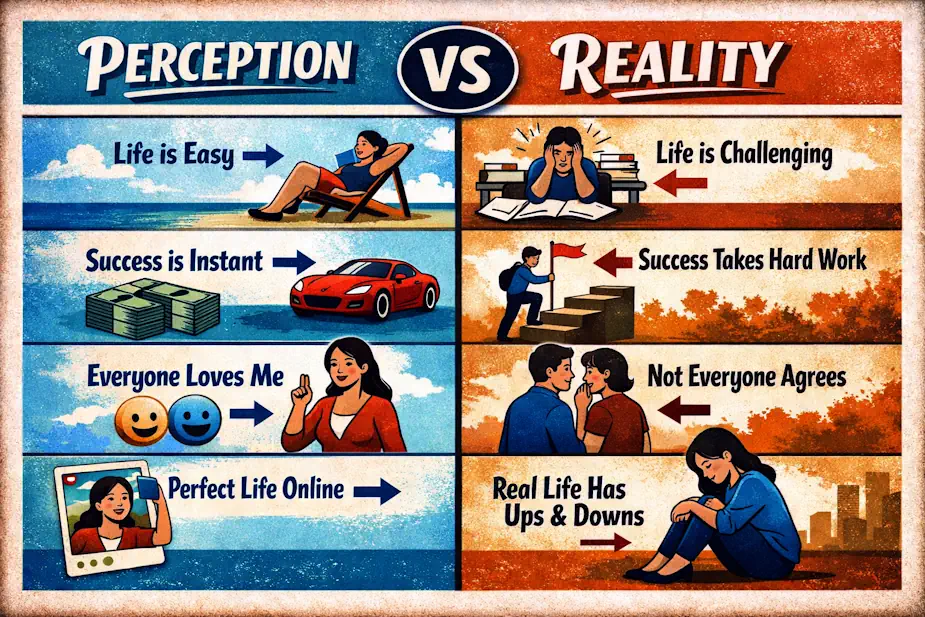
 Figure 1: Our perception filters experiences through beliefs and emotions. What we expect often becomes what we see.
Have you ever truly questioned the essence of reality? In the journey of health advocacy, this is not just a philosophical pursuit—it is deeply connected to our mental and physical health. The way we perceive the world shapes our stress levels, emotional responses, and even long-term health outcomes. When we unravel the layers of perception, we begin to distinguish between what is “real” and what is a construct of our nervous system. This inquiry challenges our understanding of the world and opens the door to healthier thinking patterns and improved emotional resilience.
Figure 1: Our perception filters experiences through beliefs and emotions. What we expect often becomes what we see.
Our perception of the world is not a direct reflection of reality, but a subjective interpretation filtered through our unique lenses of experience. This becomes critical when considering cognitive well‑being. The same brain mechanisms that allow us to interpret art can also distort our understanding of health symptoms or relationships.
In 2026, neuroscience views the brain as a “prediction engine.” It doesn’t wait for sensory information to arrive; it guesses what is happening based on past data.
In health, this matters. If your brain predicts danger (due to past trauma or chronic stress), it may amplify pain signals or trigger a stress response even when you are physically safe.
Perception is an active construction. For someone raised in a high-stress environment, the brain may develop a “heightened vigilance” that persists for decades. This adaptation increases cortisol and adrenaline, contributing to long-term health challenges like hypertension or chronic anxiety.
Our expectations are powerful physiological drivers.
Vascular Bridge Insight: By changing our “Perception Filter,” we can effectively lower our baseline cortisol, reducing the inflammatory load on our vascular system.
Culture and language profoundly shape how we interpret health. Different cultures categorize symptoms in unique ways—some focus on physical sensations, while others emphasize emotional or spiritual meaning.
Recognizing these “Cultural Lenses” helps us communicate better with our healthcare teams. Language influences whether we view aging as a “decline” to be feared or a “growth phase” to be managed.
When the brain interprets a situation as threatening—even if it isn’t—it activates the HPA axis. This releases cortisol, increasing heart rate and muscle tension. Over time, repeated misperceptions of danger contribute to chronic inflammation.
If a person expects pain, the brain’s “volume control” for pain signals stays high. Reassurance and cognitive reframing can “dial down” this perceived intensity, making it an essential tool for chronic pain management.
Past trauma can “re-wire” the brain’s threat-detection system. Understanding that a reaction is a “perception error” rather than a “reality error” helps reduce self-blame and supports emotional processing.
| Icon | Term | Definition |
|---|---|---|
| 🧠 | Perception | The brain’s interpretation of sensory information, filtered by experience. |
| ⚡ | Stress Response | The body’s reaction to a perceived threat (Cortisol/Adrenaline). |
| 💬 | Cognitive Bias | A mental shortcut that can distort judgment or reality. |
| 🩺 | Nocebo Effect | When negative expectations worsen physical symptoms. |
| 🔄 | Cognitive Flexibility | The ability to shift perspectives; a key marker of healthy aging. |
Can our perception of reality change over time? Yes. As we learn new information and reflect on past beliefs, our “Internal Map” evolves. Growth and learning naturally reshape how we perceive the world.
How can I distinguish between reality and illusion? Question your assumptions and separate facts from opinions. Being aware of your own Cognitive Biases helps reduce the “noise” in your perception.
Why is questioning perception important for seniors? Questioning rigid thinking supports Cognitive Flexibility, which research shows is protective against neurodegenerative decline and improves emotional resilience.
The interplay between reality and perception invites ongoing introspection. When we question our assumptions, we strengthen our mental clarity and cultivate a more grounded approach to our health. Aging may change our bodies, but our perception of that change determines our quality of life.