
Sustainable Living: A Green, Healthy Life That Truly Lasts
Practical Steps to Live Greener and Healthier
Sustainable living isn’t just about the planet—it directly improves your health, lowers long-term costs, and reduces disease risk. Small, practical changes in food, energy, and daily habits can deliver immediate personal benefits while supporting environmental sustainability. > Medical Disclaimer: This content is for informational and educational purposes only. Always consult a qualified healthcare provider regarding any medical condition.
 Everyday choices that support a greener planet often support a healthier body.
What Is Sustainable Living?
Sustainable living means meeting today’s needs without compromising future generations. For health experts, it means connecting environmental sustainability with disease prevention.
 Figure 2: Energy‑efficient house: insulated walls and attic, triple‑pane windows, solar panels on roof, heat‑pump HVAC, sealed ducts, and LED lighting.
The Health Connection:
- Cleaner Air, Stronger Lungs: Reducing fossil fuel use lowers air pollution—a major contributor to asthma, heart disease, and stroke.
- Healthier Diets: Climate-smart meals rich in plants are linked to lower risks of diabetes and cardiovascular disease.
- Mental Well-Being: Nature exposure and active transport (walking/cycling) improve mood and reduce anxiety.
🛠️ Interactive Decision Tree
1. Do you have asthma, heart disease, or heat sensitivity?
- Yes → Prioritize indoor air quality and home cooling strategies.
- No → Proceed to question 2.
2. Are you managing diabetes, high blood pressure, or obesity?
- Yes → Focus on climate-smart meals and daily physical activity.
- No → Start with waste reduction and low-tox home swaps.
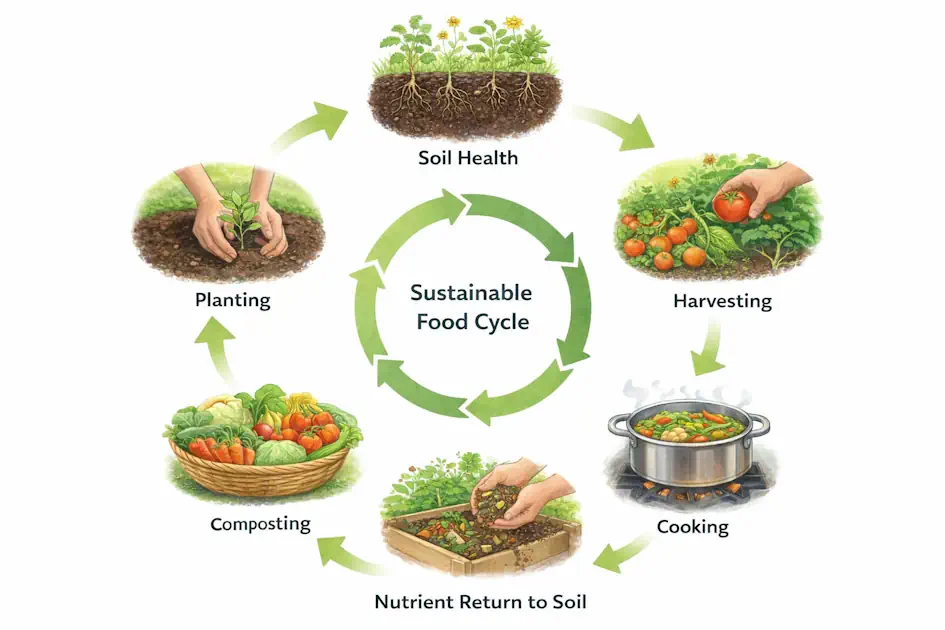 Figure 3: Sustainable Food Cycle — A clear, eco‑friendly illustration showing how healthy soil supports planting, harvesting, cooking, and composting, returning nutrients to the earth for the next generation of growth.
🌿 Micro-Habits for Chronic Illness
For patients with fluctuating energy or “brain fog,” micro-habits are the ultimate sustainability strategy. They work with your body’s limited energy, not against it.
Examples of Micro-Habits:
- Movement: 10-second shoulder rolls or a 20-second stretch before standing up.
- Nutrition: Add one vegetable to one meal; drink water before coffee.
- Nervous System: One slow exhale before opening email; look out a window for 10 seconds to reset the vagus nerve.
- Medication: Place meds next to your toothbrush to ensure adherence.
📖 Plain-Language Glossary
- Carbon Footprint: The total greenhouse gases caused by a household.
- Climate-Smart Meals: Food choices that support health and reduce emissions.
- Energy Efficiency: Using less energy for the same service (e.g., better insulation).
- Low-Tox Home Swap: Replacing household products with safer, chemical-free alternatives.
🩺 Clinical Citations
- WHO (2025): Climate action as a public-health opportunity.
- Lancet Countdown (2026): The cost of climate inaction on human life.
- IEA (2024): Energy efficiency analysis for residential buildings.