 Figure 1: Persistent fatigue is often the first warning sign that the body is harvesting muscle for energy.
Proteins are far more than just “muscle fuel.” Every protein in your body possesses a distinct sequence of amino acids that defines its structure and function. These sequences, encoded by your genes, are the primary dictators of your biological activity.
For seniors, protein isn’t just about strength—it’s about Vascular Defense. When intake drops, your body starts a “silent harvest,” breaking down its own tissues to keep your heart and brain running.
Medical Disclaimer: This content is for informational purposes only. As a patient advocate, I encourage you to sync these targets with your kidney function (GFR) results, as protein needs are highly individual.
Figure 1: Persistent fatigue is often the first warning sign that the body is harvesting muscle for energy.
When your diet lacks sufficient protein, your body turns to its only available reserve: Your Muscles. Through a process called Muscle Catabolism, your liver converts muscle tissue into glucose for energy.
This harvest disrupts your metabolic balance, leading to a build-up of metabolic waste and a drop in Leptin (your energy-regulating hormone). The result? You feel weary even after a full night’s sleep.
Low protein intake is a direct bottleneck for wound recovery.
Keratin is a structural protein that gives your hair and nails their resilience. Without a steady supply of amino acids, your body “deprioritizes” these areas. If your nails are splitting or your hair feels like straw, your body is likely diverting its limited protein to your internal organs instead.
In 2026, we call this Protein-Energy Malnutrition (PEM).
We often think of bones as “calcium sticks,” but they are actually a living matrix of Collagen. Protein provides the framework that holds minerals in place. Without it, bone density drops, and bones lose the “flexibility” needed to prevent fractures during a fall.
Your immune system is essentially a “protein-based army.”
Neurotransmitters like Serotonin (the happy hormone) and Dopamine (motivation) are built from amino acids.
Protein is the most satiating macronutrient. It stimulates Cholecystokinin (CCK) and Leptin, which signal your brain to stop eating. Low protein intake keeps these signals “muted,” leading to constant cravings for carbohydrates and fats.
A lack of protein can disrupt your Circadian Rhythm.
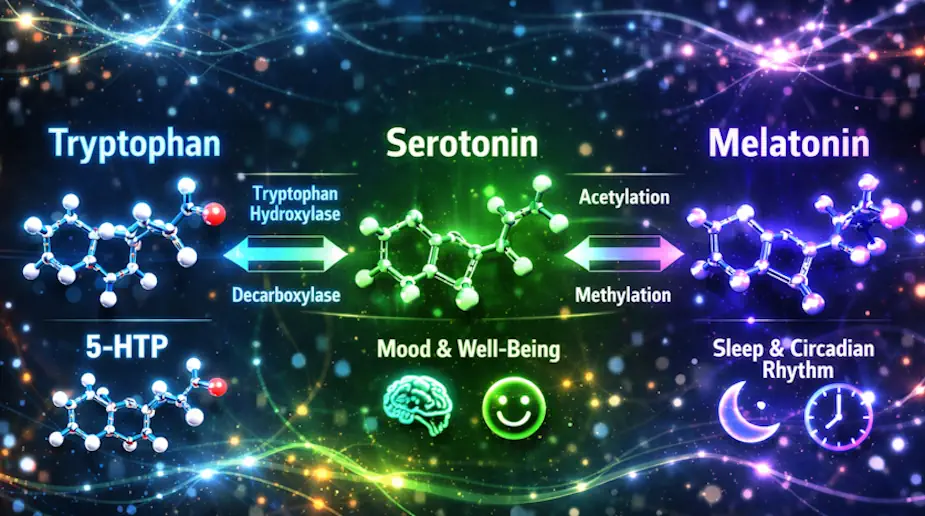 Figure 2: The tryptophan–serotonin–melatonin pathway visualized as a luminous molecular cascade—linking mood, circadian rhythm, and sleep through sequential enzymatic transformations.
Protein has a high Thermic Effect of Food (TEF), meaning your body burns more calories just digesting it. Furthermore, because muscle mass is “metabolically expensive” to maintain, losing muscle due to low protein intake effectively lowers your resting metabolic rate (BMR), making weight management nearly impossible.
In the 2026 advocacy landscape, we use a tiered approach based on activity and kidney health. To calculate your needs, use the following formula:
[\text{Protein Target (g)} = \text{Weight (kg)} \times \text{Activity Factor}]
| Activity Level | Activity Factor (g/kg) |
|---|---|
| Sedentary Senior | 1.1 – 1.2 |
| Active Senior (Walking/Yoga) | 1.2 – 1.4 |
| Resistance Training (2x Weekly) | 1.4 – 1.6 |
| Recovery from Injury/Surgery | 1.6 – 2.0 |
Pro-Tip: Spread your intake. Your body can only process roughly 25–35 grams of protein at a single time. Aim for three “Vascular Meals” a day rather than one large steak at dinner.
Q: Can I eat too much protein? For healthy seniors, the limit is high. However, if you have chronic kidney disease (CKD), excess protein can increase the workload on your kidneys. Always check your Cystatin C or Creatinine levels before jumping to the $2.0 \text{ g/kg}$ range.
Q: What are the best protein sources for seniors? Whey protein, Greek yogurt, sardines, and eggs have the highest Biological Value (BV), meaning your body can use them most efficiently for muscle repair.
Q: Does plant-based protein count? Yes, but you usually need to eat more of it. Plant proteins often lack specific “Essential Amino Acids” (like Leucine), so combining sources (like beans and rice) is critical.
Your body is a construction site that never closes. If you don’t provide the raw materials through your diet, the “foreman” will start taking bricks out of your walls (muscles) to keep the roof (heart) standing. Stay proactive, track your grams, and protect your Vascular Bridge.
Clinical Context: This research relates to managing Sarcopenia and maintaining Vascular Resilience in the 2026 senior cohort.