Gluten-Linked Issues You May Not Know
Research from 2024-2025 highlights the complex link between gluten exposure, intestinal permeability, and neurological symptoms.
Beyond the Gut: Understanding Multi-System Gluten Reactions
Gluten can trigger far more than digestive discomfort. Beyond celiac disease, research from 2024-2025 shows links between gluten exposure, intestinal permeability, immune activation, and symptoms that mimic other chronic conditions.
Understanding these gluten-linked issues helps patients ask clearer questions, avoid unnecessary restrictions, and work more effectively with their healthcare team.
Medical Disclaimer: This content is for informational and educational purposes only. Always consult a qualified healthcare provider regarding any medical condition.
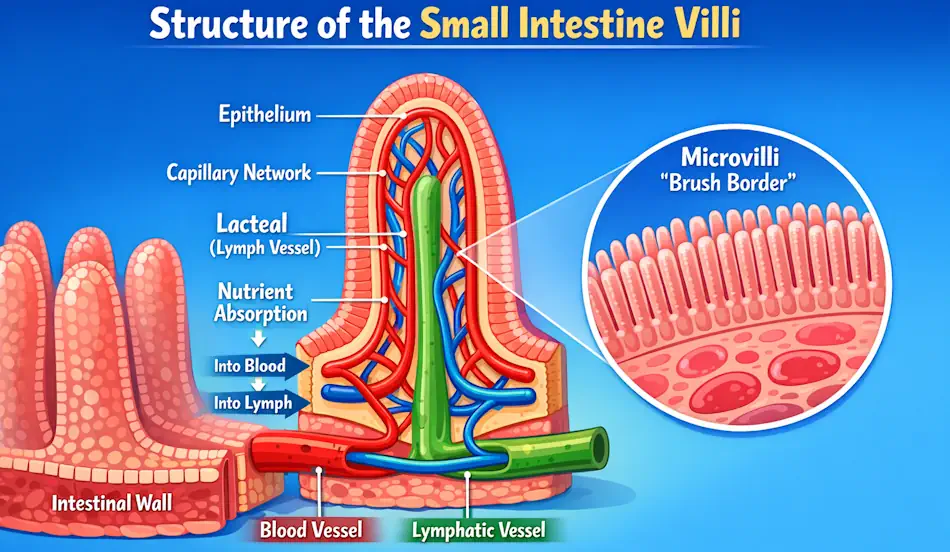 Figure 1Colorful diagram of a small intestine villus showing its key structures—epithelium with microvilli (brush border), capillary network, and central lacteal—working together to increase surface area and absorb nutrients into the blood and lymph.
1. Intestinal Cell Damage Beyond Celiac Disease
A 2024 Stanford Medicine study using intestinal organoids found a new molecular link between gluten exposure and cell death. This suggests gluten may trigger cellular stress pathways in genetically susceptible individuals, even those without a formal celiac diagnosis.
2. Immune Activation Without Autoimmunity
Non-celiac gluten sensitivity (NCGS) does not cause traditional villi damage, but research shows it may trigger innate immune activation and gut barrier disruption. Symptoms often mimic celiac disease but lack the standard autoimmune markers found in blood tests.
3. The Neurological and Skin Link
The “Gut-Brain Axis” is highly sensitive to gluten-related inflammation. Clinical data from Mayo Clinic reports that exposure can lead to:
- Neuropathy: Numbness or tingling in the extremities.
- Brain Fog: Cognitive impairment and persistent headaches.
- Dermatitis Herpetiformis: A specific, itchy skin rash linked to gluten.
Interactive Decision Tree: Is Gluten the Problem?
- Do you have chronic digestive symptoms?
- Yes -> Continue
- No -> Consider non-digestive gluten-linked issues (Fatigue/Fog)
- Have you been tested for celiac disease while still eating gluten?
- No -> Ask your clinician for a Celiac Panel before stopping gluten.
- Yes -> Continue
- Tests negative for celiac and wheat allergy?
- Yes -> Possible NCGS or FODMAP intolerance.
- No -> Follow clinician-guided Celiac protocols.
Clinical Glossary
- Villi: Finger-like projections in the small intestine that absorb nutrients.
- Intestinal Permeability: A condition where the gut lining becomes more porous (Leaky Gut).
- NCGS: Non-Celiac Gluten Sensitivity; symptoms occurring without autoimmune markers.
- FODMAPs: Fermentable carbohydrates that can mimic gluten-related bloating.
- TG2: Transglutaminase 2; an enzyme involved in celiac autoimmune reactions.
About the Researcher
Tommy T. Douglas is an independent health researcher and patient advocate. A survivor of a major heart attack (2008) who manages Type 2 Diabetes, he specializes in translating complex medical data into actionable health literacy for seniors.