Sustainable Living: A Green, Healthy Life That Truly Lasts
A patient-centered guide connecting green choices with better heart health, respiratory function, and metabolic stability.
Practical Steps to Live Greener and Healthier
Sustainable living isn’t just about the planet—it directly improves your health, lowers long-term costs, and reduces disease risk. Small, practical changes in food, energy, and daily habits can deliver immediate personal benefits while supporting environmental sustainability. > Medical Disclaimer: This content is for informational and educational purposes only. Always consult a qualified healthcare provider regarding any medical condition.
 Everyday choices that support a greener planet often support a healthier body.
What Is Sustainable Living?
Sustainable living means meeting today’s needs without compromising future generations. For health experts, it means connecting environmental sustainability with disease prevention.
 Figure 2: Energy‑efficient house: insulated walls and attic, triple‑pane windows, solar panels on roof, heat‑pump HVAC, sealed ducts, and LED lighting.
The Health Connection:
- Cleaner Air, Stronger Lungs: Reducing fossil fuel use lowers air pollution—a major contributor to asthma, heart disease, and stroke.
- Healthier Diets: Climate-smart meals rich in plants are linked to lower risks of diabetes and cardiovascular disease.
- Mental Well-Being: Nature exposure and active transport (walking/cycling) improve mood and reduce anxiety.
🛠️ Interactive Decision Tree
1. Do you have asthma, heart disease, or heat sensitivity?
- Yes → Prioritize indoor air quality and home cooling strategies.
- No → Proceed to question 2.
2. Are you managing diabetes, high blood pressure, or obesity?
- Yes → Focus on climate-smart meals and daily physical activity.
- No → Start with waste reduction and low-tox home swaps.
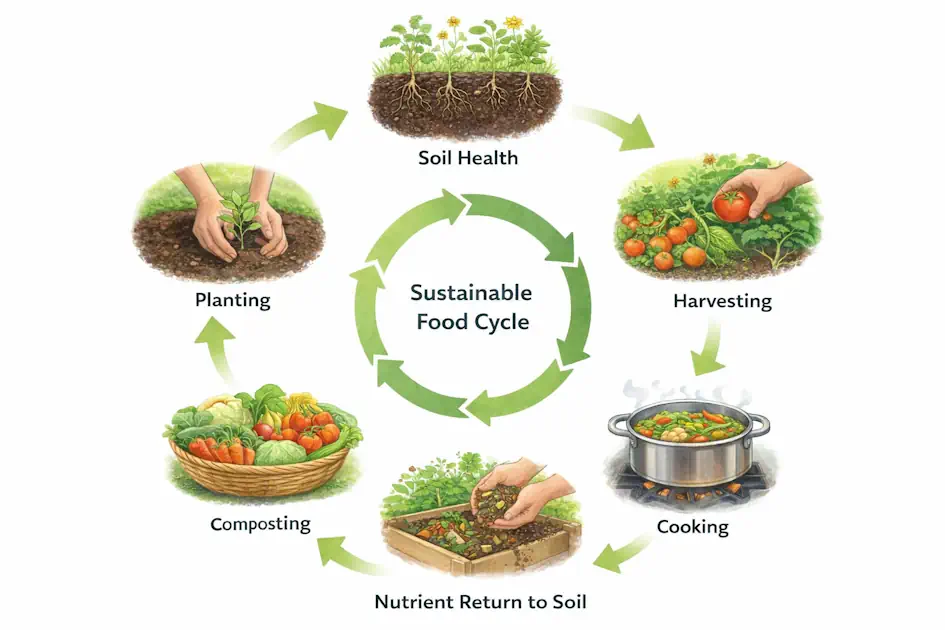 Figure 3: Sustainable Food Cycle — A clear, eco‑friendly illustration showing how healthy soil supports planting, harvesting, cooking, and composting, returning nutrients to the earth for the next generation of growth.
🌿 Micro-Habits for Chronic Illness
For patients with fluctuating energy or “brain fog,” micro-habits are the ultimate sustainability strategy. They work with your body’s limited energy, not against it.
Examples of Micro-Habits:
- Movement: 10-second shoulder rolls or a 20-second stretch before standing up.
- Nutrition: Add one vegetable to one meal; drink water before coffee.
- Nervous System: One slow exhale before opening email; look out a window for 10 seconds to reset the vagus nerve.
- Medication: Place meds next to your toothbrush to ensure adherence.
📖 Plain-Language Glossary
- Carbon Footprint: The total greenhouse gases caused by a household.
- Climate-Smart Meals: Food choices that support health and reduce emissions.
- Energy Efficiency: Using less energy for the same service (e.g., better insulation).
- Low-Tox Home Swap: Replacing household products with safer, chemical-free alternatives.
🩺 Clinical Citations
- WHO (2025): Climate action as a public-health opportunity.
- Lancet Countdown (2026): The cost of climate inaction on human life.
- IEA (2024): Energy efficiency analysis for residential buildings.