Brain Health: Is Alzheimer's Really Type 3 Diabetes?
Is Alzheimer’s ‘Type 3 diabetes’? A patient-researcher explains brain insulin resistance, glucose spikes, and practical steps to support cognitive health.
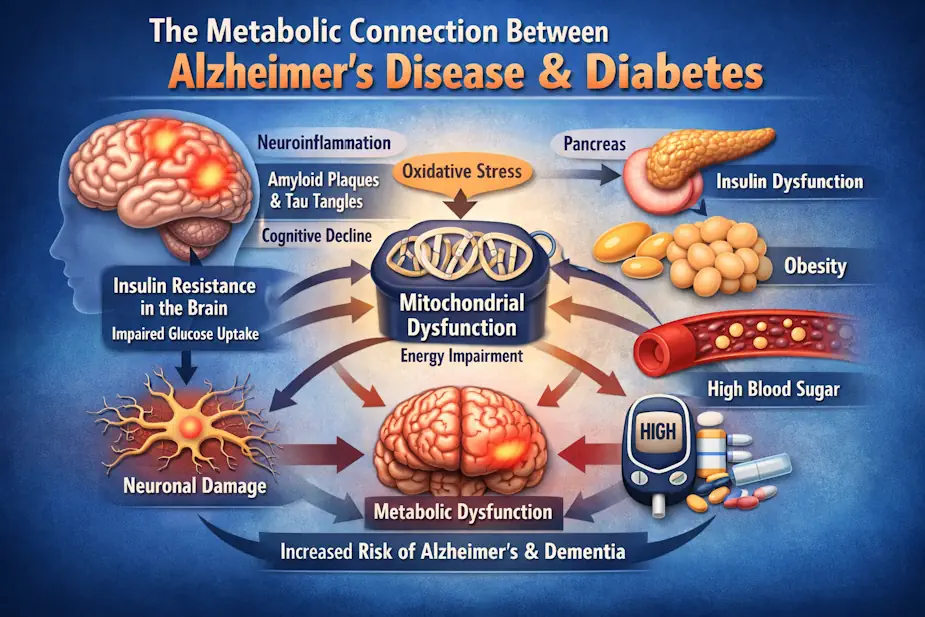
Exploring the Idea That Alzheimer’s Disease May Be Type 3 Diabetes
For years, Alzheimer’s was viewed strictly as a “plaque disease” of the brain. But after decades managing Type 2 Diabetes and recovering from a 2008 heart attack, I’ve learned that the body’s systems are never isolated.
Emerging clinical research suggests a compelling and concerning theory: Alzheimer’s may represent “Type 3 Diabetes.”
Medical Disclaimer
This content is for informational and educational purposes only and does not replace professional medical advice. Always consult a qualified healthcare provider.
Figure Researchers increasingly describe Alzheimer’s as “Type 3 diabetes,” highlighting a metabolic failure in the brain.*
What Is Type 3 Diabetes?
Type 3 Diabetes is a research term describing insulin resistance in the brain.
Just as Type 2 Diabetes impairs insulin signaling in muscle and liver tissue, Type 3 diabetes suggests neurons lose the ability to use glucose efficiently—effectively starving brain cells of energy.
- Researcher’s perspective:
When neurons can’t access glucose, they weaken and die, leading to the cognitive decline seen in dementia.
The Insulin–Memory Connection: What I’ve Observed
In both my personal data and research review, periods of brain fog often correlate with glucose spikes.
- Vascular damage:
Elevated blood sugar damages fragile cerebral blood vessels, similar to how it contributed to my heart attack. - Amyloid buildup:
Insulin and amyloid plaques are cleared by the same enzyme. Chronic hyperinsulinemia diverts that system away from clearing amyloid.
Why This Matters Clinically
Viewing Alzheimer’s through a metabolic lens may improve early intervention and prevention strategies, including targeted lifestyle changes and antidiabetic therapeutics.
PubMed
Insulin’s Role in Brain Health and Memory
Insulin regulates brain energy metabolism, memory formation, and cognition. Insulin resistance increases amyloid‑β plaques and neurofibrillary tangles while impairing glucose uptake—key drivers of cognitive decline.
Cord.edu
Research also suggests improved insulin sensitivity—through exercise and diet—may support long‑term brain health.
Symptoms of Brain Insulin Resistance
- Brain fog: difficulty concentrating
- Memory issues: forgetfulness or recall difficulty
- Fatigue: persistent low energy
- Mood changes: irritability, mood swings
- Motor symptoms: stiffness, tremor, slowed movement
These signs illustrate how metabolic dysfunction affects cognition.