Mind Matters: Cultivating Mental Health in 2026
Why prioritizing mental wellness is a critical health investment and evidence-based strategies for emotional resilience.
Mental Health in the Modern Age: Why Wellness Matters
From workplace stress and economic uncertainty to digital burnout, modern life presents constant psychological demands. Understanding how to protect and strengthen your mental health is one of the most important investments you can make for your longevity.
Medical Disclaimer: This content is for informational and educational purposes only. It does not replace professional medical advice, diagnosis, or treatment. Always consult a qualified healthcare provider regarding any medical condition.
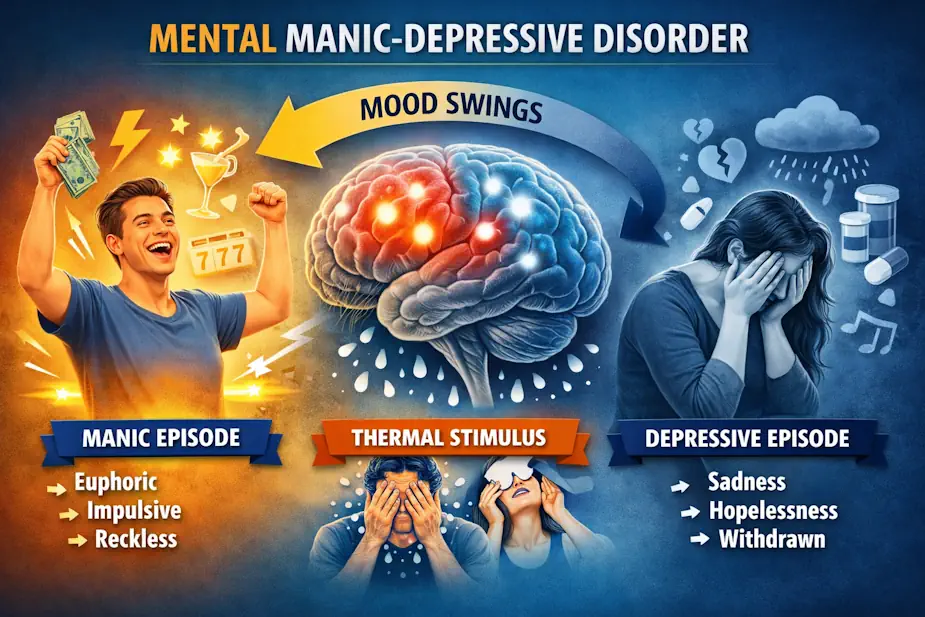
Figure 1: A clinical visualization of the emotional extremes in bipolar disorder. Left: Manic episode (impulsivity/euphoria); Center: Brain chemical dynamics; Right: Depressive episode (isolation/subdued tones).
What Is Mental Health?
Mental health refers to your emotional, psychological, and social well-being. It affects how you think, feel, act, and handle stress.
Core Components of Mental Wellness
- Emotional Resilience: The ability to adapt to stress and change.
- Cognitive Function: Clear thinking, memory, and focus.
- Social Well-Being: Building and maintaining supportive relationships.
- Purpose: Experiencing meaning and life satisfaction.
The Impact of Technology
Technology offers connection but can also drive information overload and “dopamine cycles” that exhaust the brain.
Digital Health Habits
- Set boundaries: Establish strict daily screen time limits.
- Notification Audit: Turn off all non-essential pings.
- The 90-Minute Rule: No screens 90 minutes before bed to protect melatonin production.
- Intentional Curation: Unfollow accounts that trigger negative social comparison.
Nutrition for Brain and Mood
Your gut and brain are closely connected. Nutritional psychiatry shows that diet quality directly influences mental clarity and mood stability.
| Nutrient Group | Best Sources | Mental Benefit |
|---|---|---|
| Omega-3s | Salmon, flaxseed, walnuts | Neuroprotection & Mood |
| Magnesium | Leafy greens, almonds | Stress Reduction |
| B-Complex | Eggs, legumes, lean beef | Energy & Cognitive Function |
| Healthy Fats | Avocado, olive oil | Sustained Brain Energy |
When to Seek Professional Support
Seeking therapy is a proactive act of self-leadership. You should consult a professional if you experience persistent sadness, major sleep changes, or difficulty functioning for more than two weeks.
- Psychiatrists: Medical doctors who manage medication.
- Psychologists: Specialists in therapy and clinical assessments.
- Counselors: Professionals providing emotional and therapeutic support.
Emergency Note: If you are in the U.S. and experiencing a crisis, call or text 988 for the Suicide & Crisis Lifeline.
🧐 Mental Health FAQ
What are early warning signs of declining mental health?
Early signs include irritability, social withdrawal, sleep disruption, loss of interest in hobbies, and difficulty concentrating.
How does chronic stress affect the brain long-term?
Chronic stress can impact memory and emotional regulation by increasing inflammation markers throughout the nervous system.
Can improving gut health improve my mood?
Yes. Research on the gut-brain axis suggests that high microbiome diversity can positively influence anxiety levels and mood stability.
🎯 March 2026 Clinical Update: Blood Pressure & The Mind
To protect long-term cognitive health and reduce “Brain Fog,” seniors should target a systemic blood pressure of <130/80 mmHg. High blood pressure is a primary driver of vascular-related mental fatigue.
About the Researcher
Tommy T. Douglas is an independent health researcher and patient advocate. A survivor of a major heart attack who manages Type 2 Diabetes, he specializes in translating complex medical data into actionable health literacy for seniors.
Explore more Hubs: Heart | Metabolism | Brain | Liver