The Dawn of Brain Rejuvenation: Hope for Dementia in 2026
Exploring the 2026 breakthroughs in dementia care, from precision p-tau217 blood diagnostics to music-driven synaptic rejuvenation.
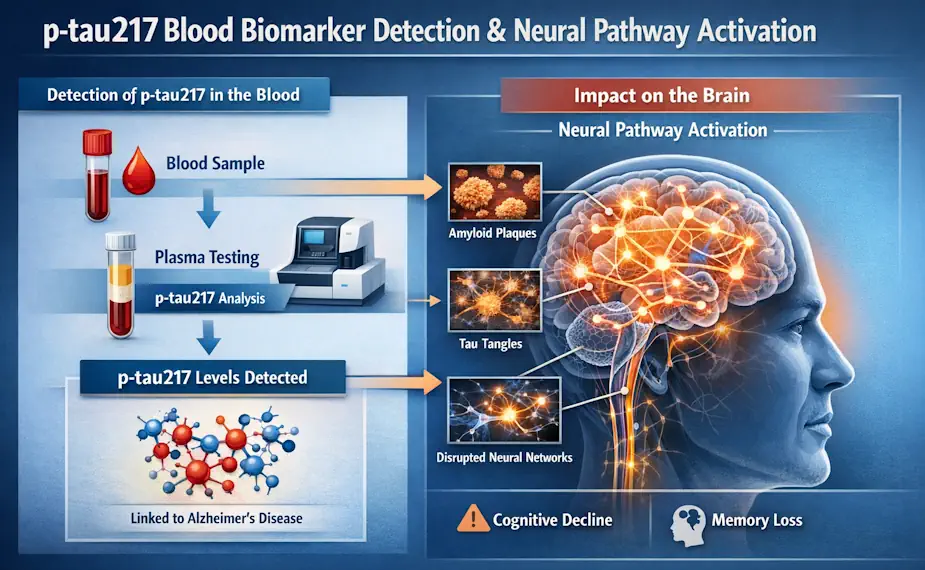
Exploring New Hope for Dementia: 2026 Breakthroughs
The human brain is a remarkable organ, but the “biological tax” of aging often manifests as cognitive decline. For years, dementia and Alzheimer’s were viewed as inevitable. However, as of early 2026, the focus has shifted from merely managing symptoms to actively “reprogramming” the aging process.
In 2026, dementia care enters a new era—where precision diagnostics like p‑tau217 enable early detection years before symptoms, and non-invasive therapies such as music-driven synaptic activation offer hope for cognitive resilience. This dual approach maps a transformative path toward proactive, personalized brain health.
Can “Young” Immune Cells Reverse Brain Aging?
Advancements in genetic brain research have shifted from early work on parabiosis (the circulatory connection of young/old models) to a focus on cellular manufacturing.
At Cedars-Sinai in 2025, researchers successfully manufactured “young” immune cells in the lab that reversed signs of Alzheimer’s in animal models. By early 2026, these efforts moved into Phase I human safety trials, aiming to replace aged, “senescent” immune cells with high-functioning, lab-grown alternatives.
Beyond Bone Marrow: The Extracellular Vesicle Theory
New evidence suggests that young bone marrow doesn’t just provide “new blood”—it releases extracellular vesicles (EVs). These tiny particles act as biological “envelopes” capable of crossing the blood-brain barrier (BBB).
In 2026, EV-based therapies are used to:
- Reactivate Synaptic Plasticity: Allowing the brain to bypass damaged circuits and form new connections.
- Clear Amyloid-Beta: Restoring the “soluble” amyloid levels necessary for healthy brain function rather than just wiping out all protein.
- Reduce Neuroinflammation: Cooling the “inflamed” brain environment that accelerates dementia progression.
The 2026 Gold Standard: The p-tau217 Blood Test
The most significant leap for patients is the FDA-approved p-tau217/ß-Amyloid blood test. This diagnostic tool has effectively replaced the need for invasive lumbar punctures and expensive PET scans for many patients.
- 95% Accuracy: Latest data shows precision rates reaching 95% in distinguishing Alzheimer’s from other forms of dementia.
- The 10-Year Warning: These tests can now predict the onset of cognitive decline up to 10 years before symptoms appear. This “Proactive Window” allows for the implementation of intensive metabolic and lifestyle interventions while the brain is still healthy.
UK ADAPT Trial: Bringing Precision to the Public
The UK has launched the ADAPT trial, a landmark national study testing whether p‑tau217 tests can be effectively deployed through standard NHS memory clinics. With over 1,100 participants, the trial is designed to prove that early results (received within three months) significantly improve clinical decision-making and patient quality of life.
The Melody of Memory: Music as “Digital Medicine”
In 2026, music therapy is no longer seen as just a recreational activity. Magnetoencephalography (MEG) scans have shown that music therapy activates compensatory neural networks.
When primary memory paths are damaged by dementia, music acts as a “detour.” It allows the brain to access memories through emotional and rhythmic centers in the cerebellum and hippocampus that are often the last regions affected by the disease. This “rhythmic entrainment” helps stabilize mood and improves verbal fluency in patients with moderate decline.
Frequently Asked Questions (High-Intent Queries)
1. Can “young” immune cells be manufactured for human use yet?
As of early 2026, lab-grown “young” immune cells are primarily in Phase I/II clinical trials. Scientists are working on “off-the-shelf” versions that wouldn’t require a donor, similar to how modern CAR-T therapies are evolving for oncology.
2. How does the p-tau217 blood test differ from standard memory tests?
Standard memory tests (like the MMSE) detect existing damage. The p-tau217 blood test detects the biological precursors (phosphorylated tau protein) in the blood years before memory loss actually manifests.
3. Does the shingles vaccine really reduce dementia risk?
A major 2025 study suggests that the Zostavax (shingles) vaccine may be linked to a slower progression of dementia. Researchers believe this is due to a reduction in the overall “viral load” and systemic inflammation that can trigger neurodegeneration.
4. Why is “soluble” amyloid-beta now considered beneficial?
Older theories suggested all amyloid was toxic. 2025 research clarifies that while plaques (clumps) are harmful, soluble amyloid-beta is a necessary protein for maintaining synapse health. The goal of 2026 therapies is “proteostasis”—restoring balance rather than total elimination.
March 2026 Clinical Update
Metabolic Defense: Current 2026 data emphasizes that biomarker success is heavily dependent on metabolic health. Managing cardiovascular health (specifically BP < 130/80) and reducing pro-inflammatory dietary triggers remains the foundation for all rejuvenation therapies.
Clinical Citations & References (2025-2026)
- NIH / NIA (Sept 2025): 2025 Alzheimer’s Research Progress Report – Updates on p-tau217 and alpha-synuclein.
- Johns Hopkins (Summer 2025): FDA-Approved Blood Test for Alzheimer’s – Validation of the p-tau217/ß-Amyloid ratio.
- Cedars-Sinai (August 2025): “Young” Immune Cells Reversing Aging – Study on manufactured immune cells.
- Alzheimer’s Research UK (Dec 2025): CTAD 2025 Highlights – Updates on lecanemab and Brainshuttle tech.
- PMC / Science (Feb 2026): Neural Mechanisms of Music Therapy – MEG mapping of compensatory networks.