Genomic Medicine: Tailoring Treatments to Your Genes
A comprehensive 2026 guide to genomic medicine for seniors, covering the Human Pangenome, Bridge RNAs, and personalized medication safety.
Understanding Your Genes for Better Health
Understanding your genetic makeup is no longer a luxury—it is the baseline for modern health management. By moving from a “one-size-fits-all” approach to Precision Medicine, you can identify risks before symptoms appear. Today’s genomic testing is faster than ever; “Ultra-rapid” sequencing can now provide a full genetic diagnosis in under 8 hours.
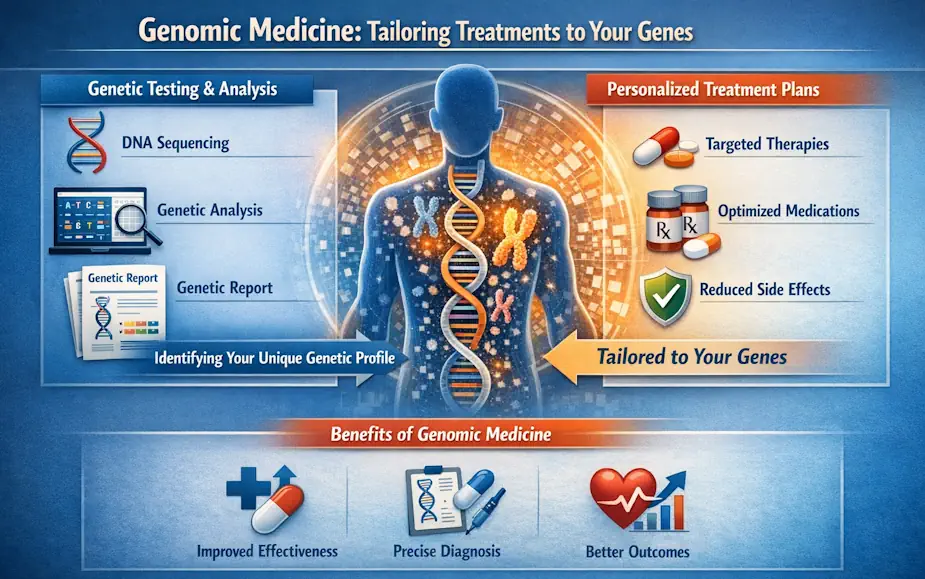
Genomic medicine combines DNA sequencing and genetic analysis to identify an individual’s unique genetic profile. This allows for targeted therapies, optimized medications, and a significant reduction in adverse side effects.
The Human Pangenome: A More Inclusive Blueprint
While the original Human Genome Project provided a “standard” map, the Human Pangenome Reference Consortium (HPRC) has recently expanded this to a “graph-based” map.
By including DNA from hundreds of diverse individuals, doctors can now identify variations specific to your ancestry. This is a critical step in reducing medical bias and improving the accuracy of health plans for all ethnicities. In 2026, the Pangenome ensures that a “variation” in your DNA isn’t misidentified as a disease marker simply because it wasn’t present in the original (predominantly European) reference.
Cutting-Edge Technologies & 2026 Research
The field has matured from experimental research to direct clinical intervention through three key pillars:
1. Bridge RNAs (Next-Gen Editing)
Unlike CRISPR, which often cuts DNA (potentially causing “genetic scars”), Bridge RNAs act like a genetic “paste” tool. In 2026, this technology is being fast-tracked for large-scale DNA rearrangements to treat complex conditions like Cystic Fibrosis without the risks associated with double-stranded breaks.
2. Foundation AI Models (Evo 2)
We have entered the era of Generative Biology. New AI models don’t just find mutations; they simulate how your body will respond to a drug before you take the first pill. This allows for virtual “stress tests” of clinical protocols tailored to your specific genome.
3. Epigenomic Mapping
This process identifies chemical modifications (such as DNA methylation) that influence gene activity without altering the DNA sequence itself. It highlights how your lifestyle, diet, and environment directly impact trait expression and disease susceptibility.
[Image of DNA methylation and histone modification in epigenetics]
The Evolution of Public Health Integration
Inherited genetic disorders affect millions in the U.S., historically leading to complex health journeys and higher costs. As of 2026, the public health landscape has shifted to an “Integrated Surveillance” model.
The functions previously held by the CDC’s Division of Blood Disorders have been integrated into the Office of Public Health Data, Surveillance, and Technology (OPHDST). This move ensures that genomic data is used in real-time to identify population health trends and promote health equity across rural and underserved populations.
📋 The “Genomic Blueprint” Checklist
Take these questions to your next appointment to bridge the gap between “standard medicine” and “precision medicine.”
For Prevention & Wellness
- “Based on the Human Pangenome, are there ancestry-specific risks in my profile that standard tests might miss?”
- “Would a Polygenic Risk Score (PRS) provide a clearer picture of my heart disease risk than standard cholesterol numbers?”
- “How does my Epigenomic profile (lifestyle impact) currently compare to my baseline genetic risk?”
For Medication & Treatment
- “Can we run a Pharmacogenomics (PGx) panel before I start this new prescription to ensure the dosage is correct?”
- “Does this medication have an FDA-approved genetic biomarker on its label?”
- “Are there any ‘Bridge RNA’ clinical trials available for my specific genetic markers?”
March 2026 Clinical Update
Vascular & Liver Defense: Current advocacy for liver health emphasizes a high-protein intake (1.2–1.5 g/kg) to prevent sarcopenia. Furthermore, portal hypertension targets now align with a systemic blood pressure goal of < 130 mmHg.
❓ Frequently Asked Questions
Q: Does health insurance cover these new genomic tests? Coverage has expanded significantly. Most major insurers now cover biomarker testing for cancer and PGx testing for high-risk medications (such as blood thinners or antidepressants) if ordered by a physician to prevent adverse reactions.
Q: Can I use “Direct-to-Consumer” kits (like 23andMe) for medical decisions? Generally, no. While useful for ancestry, medical-grade sequencing happens in CLIA-certified labs. These offer the clinical depth required for surgical or pharmaceutical interventions.
Q: Why is “Metagenomics” mentioned in senior health? Metagenomics analyzes the gut microbiome. In 2026, we know the gut microbiome supports digestion, immunity, and mental health. Imbalances identified via metagenomics can act as early markers for metabolic conditions like obesity and diabetes.
About the Researcher
Tommy T. Douglas is an independent health researcher and patient advocate. A survivor of a major heart attack (2008) who manages Type 2 Diabetes with Metformin and GLP‑1 therapy, he specializes in translating complex medical data into actionable health literacy for seniors.
Sources & Clinical Citations
- CDC (2026): Strategic Plan for Data Modernization and Genomic Integration.
- HPRC (2026): Bridging the Equity Gap through Inclusive Genomic Mapping.
- Journal of Public Health Management (2025): The Impact of Federal Restructuring on Rare Disease Advocacy.
- Arc Institute (2025): Bridge RNAs: A Holy Grail in Next-Gen Gene Editing Tech.