Do Biologic Therapies Reduce Mortality in Psoriasis?
Exploring the link between targeted biologic therapies and reduced cardiovascular mortality in patients with moderate-to-severe psoriasis.

Why Mortality Risk Matters in Psoriasis Treatment
Psoriasis is no longer viewed as “just a skin condition.” It is a systemic inflammatory event associated with increased all-cause and cardiovascular mortality, particularly in patients with moderate-to-severe disease.
As our understanding of the Vascular Bridge has grown, a critical question has emerged: Can biologic therapies actually help us live longer?
Medical Disclaimer: This content is for informational and educational purposes only. It does not replace professional medical advice, diagnosis, or treatment. Always consult a qualified healthcare provider regarding any medical condition.
Figure 1: Biologic therapies represent a shift toward precision immunology, targeting internal inflammation before it damages the heart and brain.
What Are Biologic Therapies?
Biologics are targeted systemic treatments designed to block specific immune pathways involved in the inflammatory cascade. Unlike traditional “broad-spectrum” medications, biologics act like a “smart bomb” for specific cytokines.
Common Biologic Targets
- TNF-α inhibitors: The most studied for long-term cardiovascular safety.
- IL-17 inhibitors: Highly effective for rapid skin clearance and joint protection.
- IL-23 inhibitors: Known for long-term durability and metabolic safety.
The Link Between Skin and Heart
Chronic systemic inflammation doesn’t stay on the surface. It contributes directly to:
- Atherosclerosis: The hardening of arteries.
- Endothelial Dysfunction: The inability of blood vessels to relax.
- Plaque Instability: Increasing the risk of heart attack or stroke.
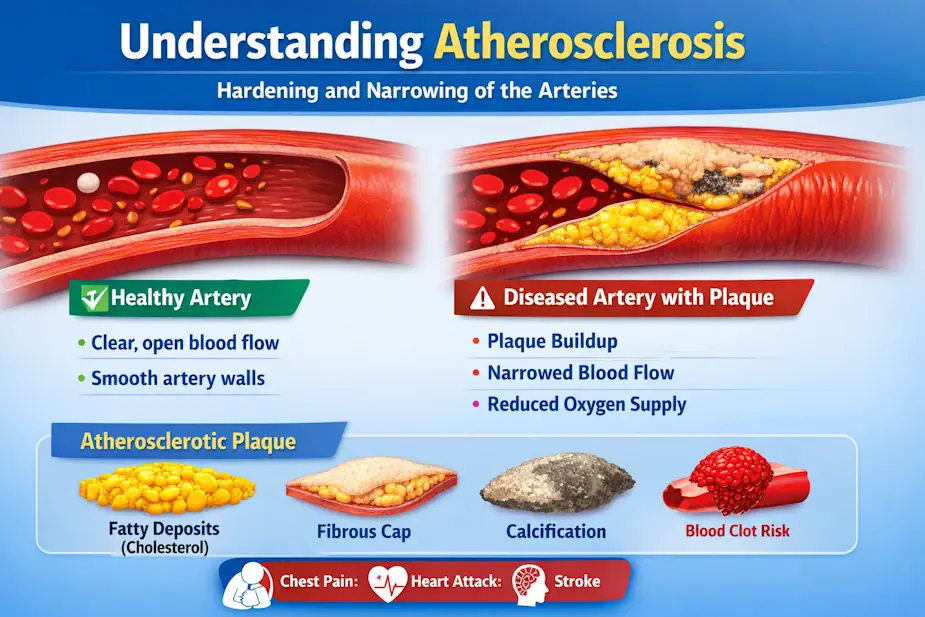 Figure 2Atherosclerosis gradually narrows arteries with fatty plaque buildup, reducing oxygen supply and increasing the risk of heart attack or stroke. Senior‑friendly educational infographic for cardiovascular health awareness.
Research consistently shows that cardiovascular disease is the leading cause of death in people with uncontrolled psoriasis. By cooling the “inflammatory fire” in the skin, biologics appear to simultaneously reduce the inflammation-driven damage to the heart and blood vessels.
Evidence of Reduced Mortality
Multiple observational studies and real-world registry data suggest that patients treated with biologics experience:
- Reduced Vascular Inflammation: Measured by PET/CT scans showing “cooler” arterial walls.
- Improved Endothelial Function: Better blood flow regulation.
- Lower Rates of MACE: A reduction in “Major Adverse Cardiovascular Events.”
The TNF-α Advantage: Currently, TNF-alpha inhibitors show the strongest historical association with cardiovascular risk reduction, though data for IL-17 and IL-23 inhibitors is rapidly evolving in 2026.
🎯 March 2026 Clinical Update: Systemic Management
- Protein Target: To maintain skin cell turnover and lean muscle mass during systemic therapy, seniors must target 1.2–1.6 g/kg of high-quality protein (USDA 2026).
- Metabolic Support: Reducing systemic inflammation can improve insulin sensitivity. Monitor your glucose levels closely if you are also managing Type 3 Diabetes pathways.
- Vascular Safety: Ensure your systemic blood pressure remains at the neuro-protective target of <130/80 mmHg.
🧐 Psoriasis & Biologics FAQ
1. Do biologics replace lifestyle changes?
No. Biologic therapy should be part of a Big 6 strategy that includes diet, movement, and stress mastery.
2. Are biologics safe for seniors?
Most 2026 data indicates a favorable safety profile, provided there is a thorough screening for latent infections and underlying heart failure.
3. Can biologics help with “Brain Fog”?
By reducing the systemic inflammatory load, many patients report improvements in cognitive clarity, likely due to reduced neuro-inflammation.
About the Researcher
Tommy T. Douglas is an independent health researcher and patient advocate. A survivor of a major heart attack who manages Type 2 Diabetes, he specializes in translating complex immunological data into actionable health literacy for seniors.
🧩 Clinical Research Glossary
Medical References
- Gelfand JM, et al. The risk of mortality in patients with psoriasis. JAMA.
- Mehta NN, et al. Effect of systemic psoriasis therapies on cardiovascular risk. J Am Acad Dermatol.
- Boehncke WH. Systemic inflammation and mortality in psoriasis. Lancet.